What Causes a Fireplace Downdraft?
Explore what causes a fireplace downdraft, including strong winds, negative air pressure, chimney height, blockages, cold flues, and nearby buildings.




Based on 500+ Reviews

Proudly American
Owned & Operated
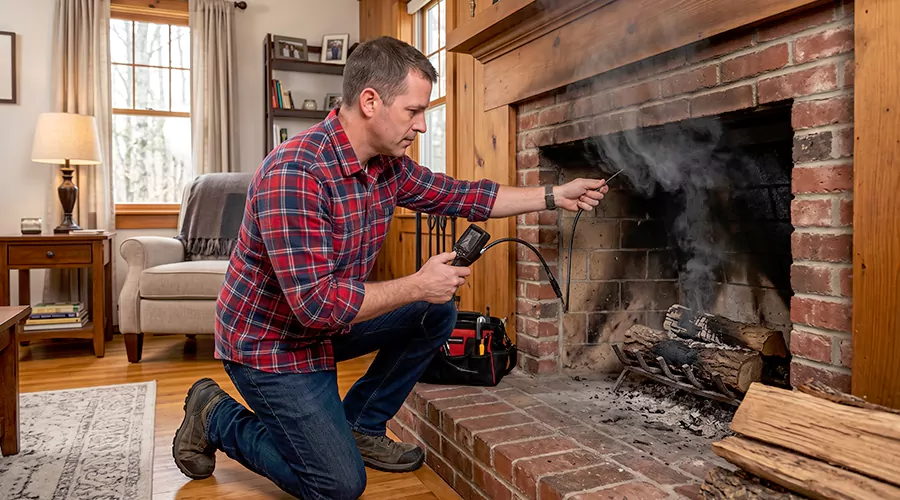
A fireplace downdraft occurs when air moves downward through the chimney instead of flowing upward and carrying smoke outside the home. This reverse airflow can cause smoke, odors, and cold air to enter the living space instead of leaving through the chimney.
A properly functioning fireplace relies on natural chimney draft created by warm air rising through the flue. When outside conditions, chimney problems, or home ventilation issues interfere with this airflow, a downdraft can occur. Regular flue cleaning can help remove soot, debris, and buildup that may restrict Airflow and contribute to draft problems.
Understanding the causes of fireplace downdrafts can help homeowners identify problems and improve fireplace performance.
A fireplace downdraft happens when air flows in the wrong direction through the chimney.
Normally:
During a downdraft:
Downdrafts are more common when the fireplace is not creating enough upward airflow to overcome outside air pressure.
Common signs that a fireplace has a downdraft problem include:
These symptoms may occur occasionally during certain weather conditions or may happen frequently.
Several factors can cause air to move downward through a chimney.
Common causes include:
Strong winds are one of the most common causes of fireplace downdrafts.
When wind moves across a roof or around nearby objects, it can create pressure changes around the chimney opening.
This can force air downward through the chimney.
Wind-related downdrafts are more likely when there are:
A chimney cap designed for wind protection may help reduce some downdraft problems.
Chimney height plays an important role in creating proper draft.
A chimney that is too short may not extend far enough above the roofline to avoid wind turbulence.
This can cause:
Proper chimney height allows the chimney to create stronger upward airflow.
Objects near the chimney can affect how wind moves around the chimney opening.
Examples include:
These objects can create air pressure changes that push air downward into the chimney.
A cold chimney may struggle to create upward draft.
This commonly occurs when:
Cold air inside the chimney can fall downward and push smoke back into the room.
Warming the chimney before building a larger fire may help improve airflow.
Negative air pressure can pull air down the chimney. This happens when more air leaves the home than enters.
Common causes include:
Signs of negative pressure include:
Improving ventilation can help restore airflow balance.
A fireplace needs enough oxygen to support combustion.
If the room does not provide enough replacement air, the fireplace may pull air from the chimney instead.
Possible causes include:
Providing additional air may help improve fireplace performance.
A blocked chimney can interfere with normal airflow.
Possible blockages include:
A blockage can create turbulence inside the chimney and contribute to poor draft.
A chimney inspection can help identify hidden obstructions.
Creosote forms when smoke particles collect on the inside of a chimney.
Heavy buildup can:
A chimney with excessive buildup may struggle to maintain proper draft.
Regular chimney cleaning helps keep airflow open.
A chimney cap helps protect the chimney opening from weather and debris.
A missing or damaged cap can allow:
A properly installed chimney cap may help control wind movement and protect the chimney.
Some downdraft problems are caused by the design of the fireplace system.
Possible issues include:
Design-related problems may require professional evaluation.
The correct solution depends on the cause.
Possible fixes include:
A suitable chimney cap can help reduce wind-related downdrafts and protect the chimney opening.
Extending the chimney may improve draft by placing it above wind turbulence.
Removing:
can improve airflow.
Reducing negative air pressure can help prevent air from being pulled down the chimney.
Starting with a small fire can help warm the flue and establish upward airflow.
Fixing damaged components can restore proper chimney operation.
A chimney cap can help reduce some downdraft problems, especially those caused by wind entering directly through the chimney opening.
However, a chimney cap may not solve downdrafts caused by:
The cause of the downdraft should be identified before choosing a solution.
A chimney fan or draft inducer may help in some situations where natural draft is consistently weak.
It may be useful for:
However, mechanical solutions should not replace fixing underlying chimney or ventilation problems.
Regular maintenance can help reduce downdraft problems.
Helpful steps include:
Preventive maintenance helps keep the chimney working efficiently.
A professional chimney inspection may be needed when:
An inspection can identify whether the problem is related to the chimney, fireplace, or home airflow.
A fireplace downdraft occurs when air moves downward through the chimney instead of carrying smoke upward. Common causes include strong winds, incorrect chimney height, cold chimney conditions, negative air pressure, blocked chimneys, and ventilation problems. Fixing a downdraft requires identifying the cause and addressing the specific issue. Solutions may include improving ventilation, cleaning the chimney, installing a proper chimney cap, adjusting chimney height, or repairing damaged components. Regular chimney maintenance and proper airflow management can help reduce downdrafts and keep the fireplace operating safely and efficiently.
Cold air may enter because of a downdraft caused by temperature differences, wind, poor draft, or ventilation problems.
Yes. Strong winds can create pressure changes that push air downward through the chimney.
A properly designed chimney cap can reduce some wind-related downdrafts but may not fix all causes.
Smoke may return because of downdrafts, chimney blockages, poor ventilation, or weak chimney draft.
Cleaning the chimney, improving airflow, checking ventilation, and addressing chimney issues can help improve draft.
Frequent downdrafts should be inspected because they may affect fireplace performance and cause smoke to enter the home.
Explore what causes a fireplace downdraft, including strong winds, negative air pressure, chimney height, blockages, cold flues, and nearby buildings.
